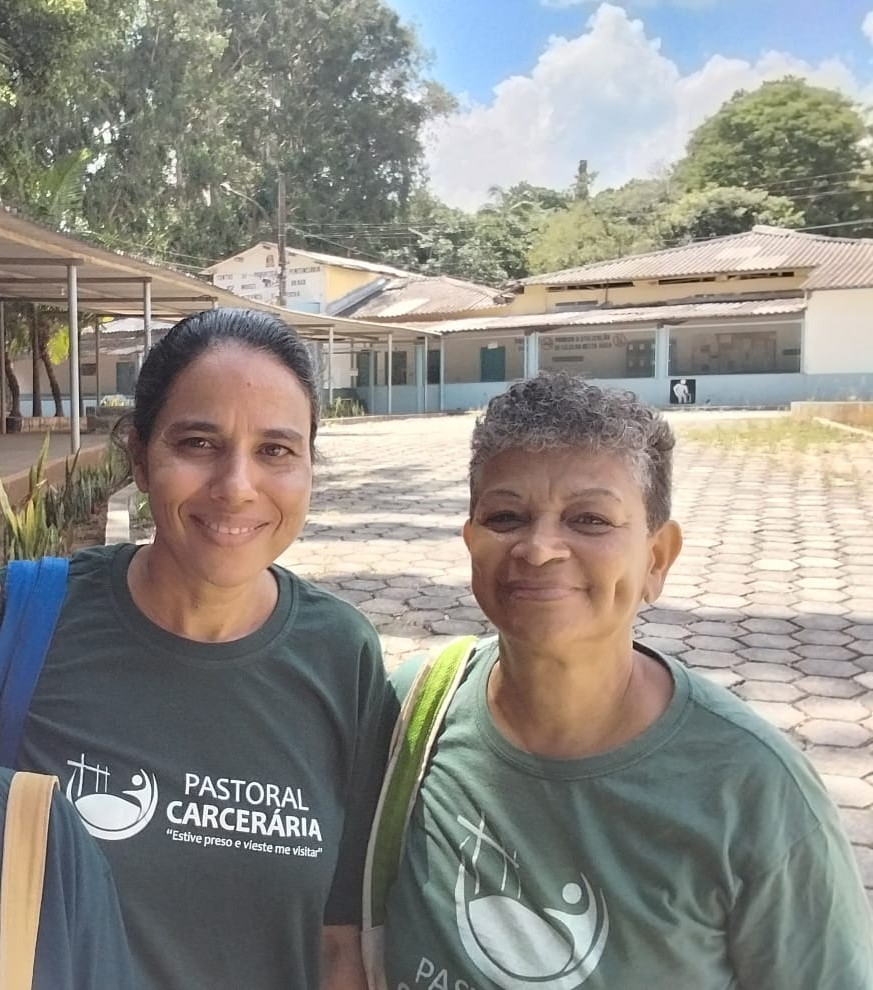
” I was in prison and you came to visit me “
(Mt 25:36)
This phrase from the Gospel has never been so concrete for me as when I learned about the work of the Prison Ministry, linked to the National Episcopal Conference of Brazil (CNBB).
Moved by this motto, this ministry works directly with people deprived of liberty and their families, bringing the presence of Christ and the Church to the prison world.
The call to visit prisons
Knowing the activities of the Ministry, I became more aware of the reality of Brazilian prisons: their difficulties, their absences, and their pain. This made me feel in my heart the call to visit our brothers and sisters who live in prisons. It is from this awareness that I decided to collaborate actively in this pastoral mission.
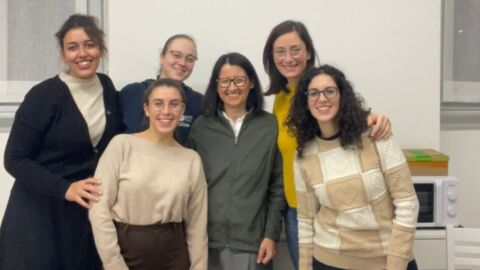
Together with the Prison Ministry team of the Brasilândia region of São Paulo, we visited four prison units located in Franco da Rocha – three for men and one for women. Our team is made up of eight members and the visits are carried out in pairs, on the days reserved for religious assistance of the Catholic Church.
The experience in women’s prisons
On Mondays, I visit the Women’s Provisional Detention Center, along with another pastoral worker. The facility houses about 700 inmates, divided into seven wards. Most of them are still awaiting the sentence – release or punishment – and transfer to another prison.
According to the law, this process should take about three months. However, many women remain there for almost two years awaiting this decision.
From the moment we enter the prison until we reach the wards where the inmates are held, a prison officer responsible for the unit’s discipline accompanies us. After a long inspection, we are allowed to enter and pass through several doors.
As soon as we enter the radius, we hear a voice announcing:
“Girls, the Catholic Church!”
Between bars, hands and prayers
The inmates in the courtyard come to join us in prayer and chat. Despite the bars that separate us, hearts and hands join together to pray and offer a handshake. They share the pain and suffering they face in their cells: they talk about the overcrowding, the cold and sour food and express the need for professional counselling.
Some talk about the crimes they have committed. Others cry when they remember their children who were left alone. I listen to everything with my heart in my hand, trying to offer consolation, even in the face of so much sadness that is reflected in the words and eyes of these women.
Gospel, sharing and faith
After the personal interviews, we usually read the Gospel of the previous Sunday. Often the inmates themselves offer to read the biblical text. Then we have a moment of sharing, in which everyone participates with simplicity and depth.
We always conclude with the prayers of the Our Father and the Hail Mary.
We strive to build positive relationships with them. We call each one by name and try to show an unconditional welcome.
Concrete presence: What we bring and what we receive
We bring rosaries, Bibles and prayers so that they can pray in their cells. We also give them envelopes, blank sheets of paper and pens to write letters to their families and friends.
At the request of some people, we contact their families, either by phone or through visits. In this way, pastoral care also helps to recreate or strengthen family ties, helping in the process of acceptance and recovery. It is an attempt to offer the possibility of starting over, restoring human and emotional relationships.
Reflection inside and outside the bars
In addition to prayer and personal meetings, during the Prison Citizenship Day Week we promote moments of reflection and study on specific themes.
The Pastoral team is invited to choose the themes on which to work with the prisoners, for example:
- Restorative Justice
- Peace Circles
- Integral Ecology
- Mental Health
Last year I had the opportunity to give a conference on the theme: “How does the human mind work? How can we reprogram it to our advantage”.
It took place in the Franco da Rocha closed regime men’s prison. At first I noticed the fear and mistrust, but gradually, as the conversation flowed and I interacted, the atmosphere changed. That moment was deeply enriching for all of us.
To welcome the members of the family
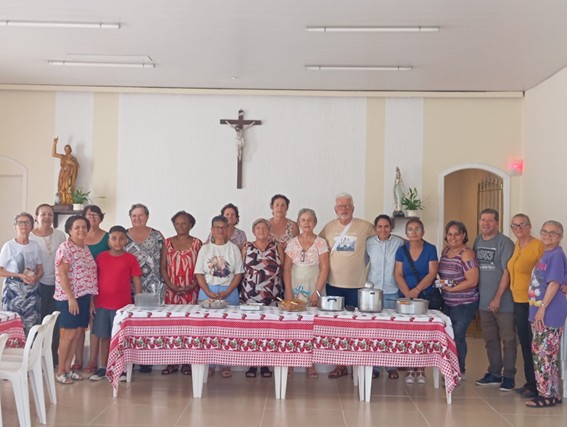
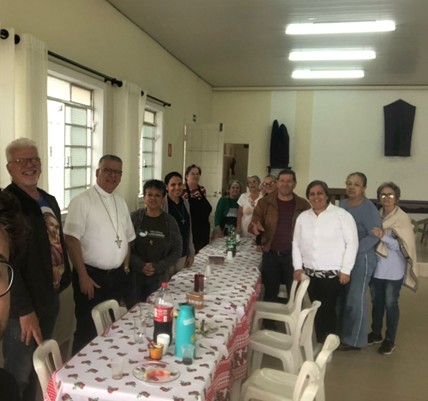
In addition to prison visits, the Pastoral organizes monthly meetings with the families of prisoners. The goal is to listen to them, support them and welcome them, both emotionally and materially.
Listening to the family members, we realize how much they suffer, sometimes more than the prisoners themselves. They are welcomed with affection and respect. The meeting always ends with a lunch prepared with love, in which we share not only food, but also solidarity.
Hope as the way
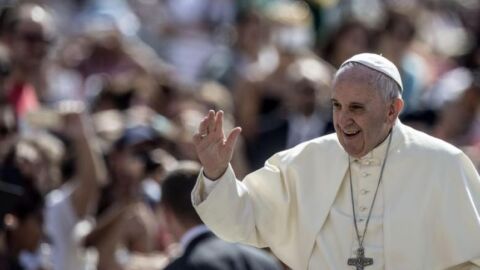
Every time I enter prison, I remember and relive Pope Francis’ invitation in this Jubilee Year: to offer hope to our brothers and sisters deprived of freedom.
Crossing the prison gates, I ask God for the grace of personal and community conversion, the gift of forgiveness and reconciliation for all humanity.
For me, being a “pilgrim of hope” means believing with all my heart that transformation is possible for everyone.
I believe that
– prisons can be humanized
– Lives can be restored
– Divine mercy can reach the darkest corners of society.
The Prison Ministry project for a “World without prisons” is not utopian. It is urgent, current and necessary. A socio-transformative project that moves towards the “Land without Evil”. Towards the dream of a Brazil where the good life is for everyone – where everyone has life, and life in abundance, as Jesus promised us.
Sr. Sheeba Thomas, South Brazil