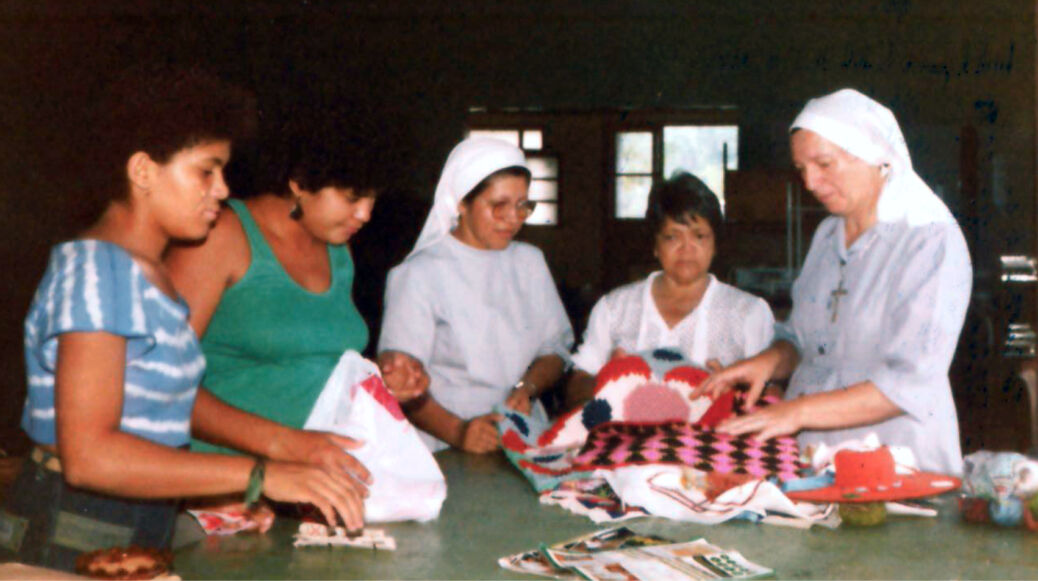
Sr Stefania Berrini, a teacher who knew no boundaries, passed away in Monza on 24 June. She was able to nurture her great maternal love through the education of children and young people, regardless of language or cultural barriers.
Born in 1931 in Angera, in the province of Varese, she soon realised she had a strong passion and calling for education and teaching, and so she graduated and began working as a primary school teacher. Alongside this, she was actively involved in her parish’s oratory and with Catholic Action. Her family was deeply Christian, and she too had always identified with this faith; she was therefore delighted to be able to devote her skills and talents to young children who were eagerly seeking answers.
All this was wonderful, but in 1956 something stirred her heart, calling her to a missionary vocation. That same year, she joined the Congregation of the Missionary Sisters of the Immaculate, and made her first vows three years later, in 1959.
In the early years, her mission focused on Italy, until, on 1 December 1963, a renewed “Yes!” marked the beginning of a new chapter in her life, both as a woman and as a missionary. Initially sent to Ibiporã, she devoted herself there to teaching and pastoral work, paying particular attention to deaf-mute children and the children of the poorest families, driven by a desire to offer them a future through education.
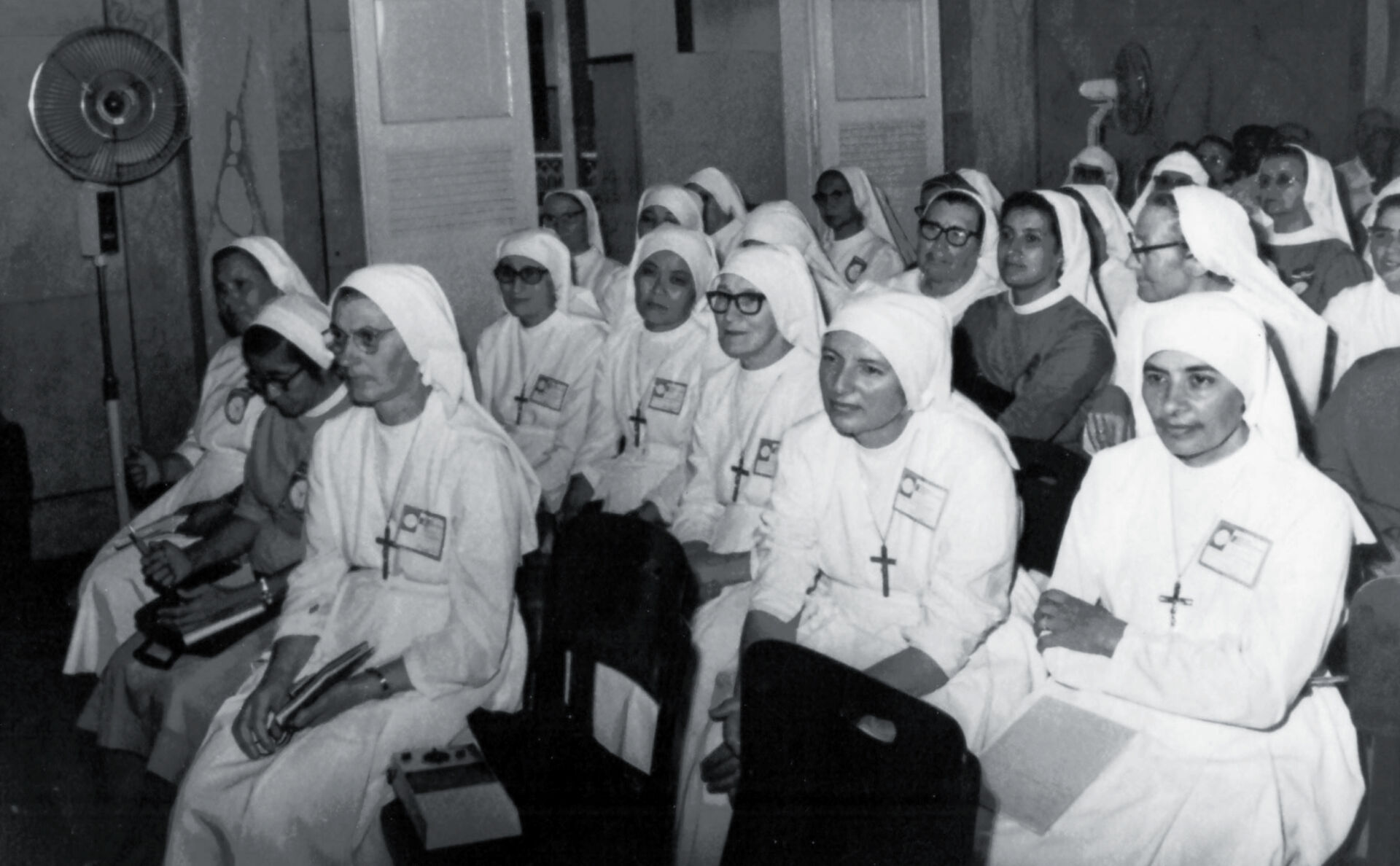
Le Missionarie dell’Immacolata partecipano al IX Congresso Eucaristico Nazionale tenutosi dal 16 al 20 luglio del 1975 a Manaus. Tra le sorelle sr. Stefania Berrini
However, it was her move to the Amazon in 1970, to Maués, that marked the most significant experience of her life. For years, she devoted herself wholeheartedly to bringing her talent, her maternal love and a great deal of positivity and energy to the Sataré-Maué Indigenous people, scattered across remote villages reachable only after hours of travelling by boat. Here, Sr Stefania recounts meeting those she described as “the most extraordinary schoolchildren in the world”: beautiful, lively children whom she taught to read and write in Portuguese, overcoming language barriers with gestures, drawings and “much grace from the Holy Spirit”.
Sr Stefania spoke of ‘her’ Indios with infectious enthusiasm, bearing witness to an experience of love given and received. She was struck by their extraordinary hospitality and their ability to share everything, a quality that never ceased to amaze her, filling her heart to the brim. She was deeply moved when she began to tell those little, attentive ears about Joseph and Mary’s journey to Bethlehem: with wide eyes and sad faces, they could not conceive that no one had opened the door to Jesus at his birth; they simply could not believe it… because they would certainly have offered their own hammock without a moment’s hesitation.
She had confided in an article that, as a teacher, she would never have swapped these new pupils for Italian students. She taught them catechism and the official language, convinced that education was the necessary means for indigenous peoples to progress without losing their cultural identity. And her ability to adapt and her openness to the exchange of values not only enabled her to truly connect with local children and adults, but also enriched her profoundly as a woman and as a consecrated person.
After periods of service in Barrerinha, Vila Missionaria, Marituba and Macapà, serious health problems forced her to return to Italy in 1987. Despite her illness, she certainly continued to serve the community by putting her intellectual gifts to use in translating and transcribing texts for as long as her strength allowed. In her final years in Monza, marked by physical and cognitive decline, what never wavered were her clear gaze and her welcoming smile, even if at times veiled by suffering.
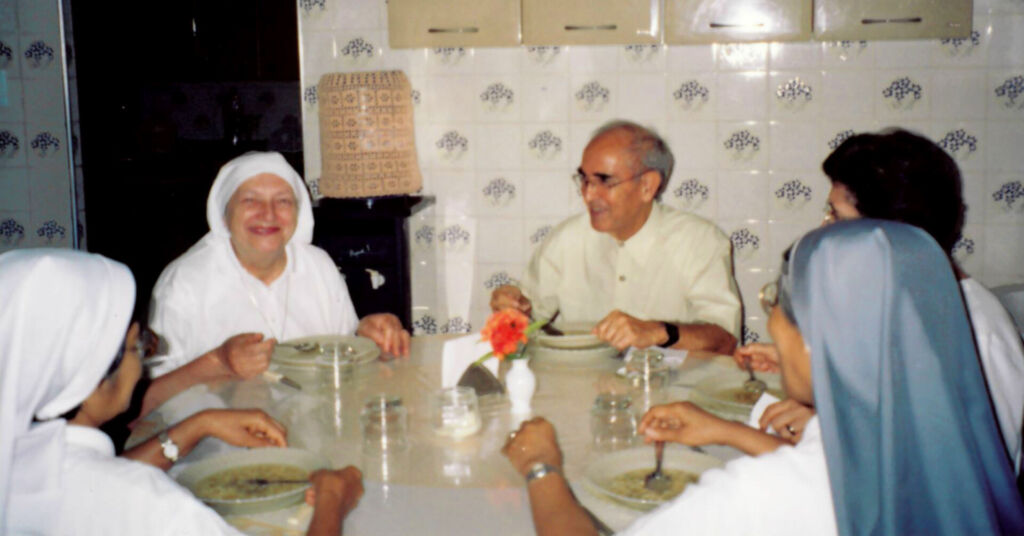
Manaus, agosto 2004. Sr. Stefania Berrini con il Vescovo dom Luiz.
Today we remember Sr. Stefania as a missionary who was passionate about her vocation, who loved the Lord deeply and devoted herself to the little ones, to those thirsting for something to fill them from within, right at the heart of their being, and to the marginalised.
We entrust her to the Father’s care, grateful for what she taught and passed on to us through her example.
Lucia Rota