Greeting is a gesture and a moment that belongs to a people’s culture. The ways in which people greet one another arise from different life contexts and meanings. It is interesting to observe what happens during a greeting, as well as what is considered important within a specific cultural context.
In Italy, for instance—and perhaps across Europe, too—greetings take into account the time of day and the season; they are thus linked to the dimension of time: “Good morning, ma’am, and have a good holiday!” “It’s getting late—good night!”
When meeting people one knows reasonably well, greetings often include inquiries—but in a way fairly general ones—such as: “How are you? How is your family?”
One day, I met a missionary who had returned from Japan; while on the street, standing just a meter away, he greeted me by pressing his hands together with great respect.
In India, too, people greet one another by pressing their hands together—almost as if praying for each other or acknowledging a sense of unity.
In Brazil, people greet each other with warm kisses and hugs to express the joy of welcoming one another.
In Africa, greetings highlight a person’s situation—what they are doing or experiencing at that moment; consequently, the words used to greet someone are as varied as the human situations themselves: “You are passing by… You have arrived… You are in bed… You are working… You are cooking… You are walking… You are eating… You are talking…” and so on.
At the heart of a greeting lies the person’s actual situation. It is like saying: “I see you!” And the response echoes that message: “Yes, you see me; I feel seen and acknowledged by you.”
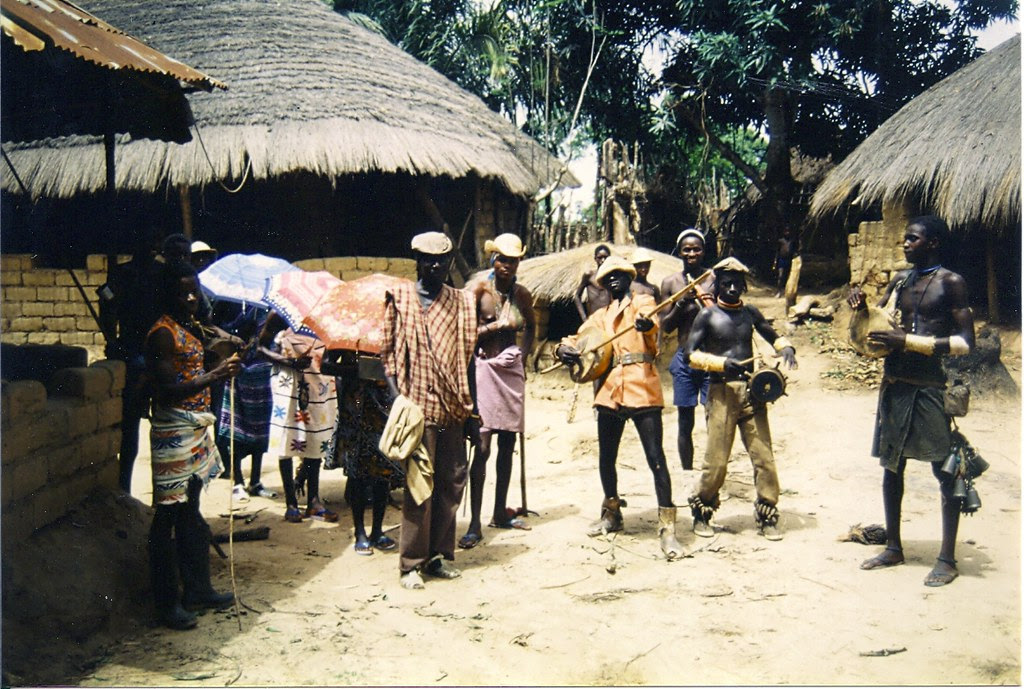
I remember that at the end of 1980, when I had begun learning the Balanta language and getting to know the local reality, I attended a funeral in a village and tried to offer greetings in the people’s language.
• Are you here? “Ba ca aullo?” – They answer: Yes, we are here, “Iii, Bu qui aullo”.
• Are you talking? “Ba ca a lifte?” – Answer: Yes, we are talking, “Iii, Bu ca a lifte”
• Are you sitting? “Ba a mese?” – Answer: Yes, we are sitting, “Iii bu qui a mese”
• Are you eating? “Ba ca a rahte?” – Answer: Yes, we are eating, “Iiii, bu qui a rahte”
An elderly man said: “The world has changed because white people greet us in our own language!” How wonderful! I felt acknowledged as playing an important role in my relationship with these people, connecting with them through a greeting that is specific to their culture.
In Guinea, during the dry season when it is very hot, to greet someone and wish them a safe journey, people say:
May the SHADOW of God accompany you! ”Qui-nbilla ni N”Hala qui na a quessana”
You find shade beneath a tree, near a village where you might meet someone and ask for a glass of water. The greeting, therefore, conveys a wish: that you may find refreshment through an encounter with another person.
In African culture—and, as we have seen, in other cultures as well—greeting someone is not merely a conventional gesture but a profound experience of encounter; it signifies acknowledging the other person and seeing them exactly where they are, in their specific situation. In reality, however, greetings today are often exchanged distractedly; people are unaware of what they are doing due to haste, habit, or a preoccupation with themselves and their own thoughts. This becomes evident every day on public transport, where everyone is hunched over their mobile phones, completely detached from one another.
It would be nice, every now and then, to realize the importance of a greeting that says: “I see you, you are passing by me, you are alive!” I can convey this with a smile, a nod, or a word! In most cases, the people we meet are seen only once in a lifetime; we have just one chance to offer a greeting that sparks a genuine encounter.
Have you ever watched birds in flight? They keep chirping; we don’t understand their language, but we do understand their attitude: we are together to share the stories of our lives! A greeting can be the start of the story!
Sr. Maristella De Marchi